Padel Rules
Everything you need to know to start playing padel. From serving to scoring, master the basics.
Quick Overview
The Court
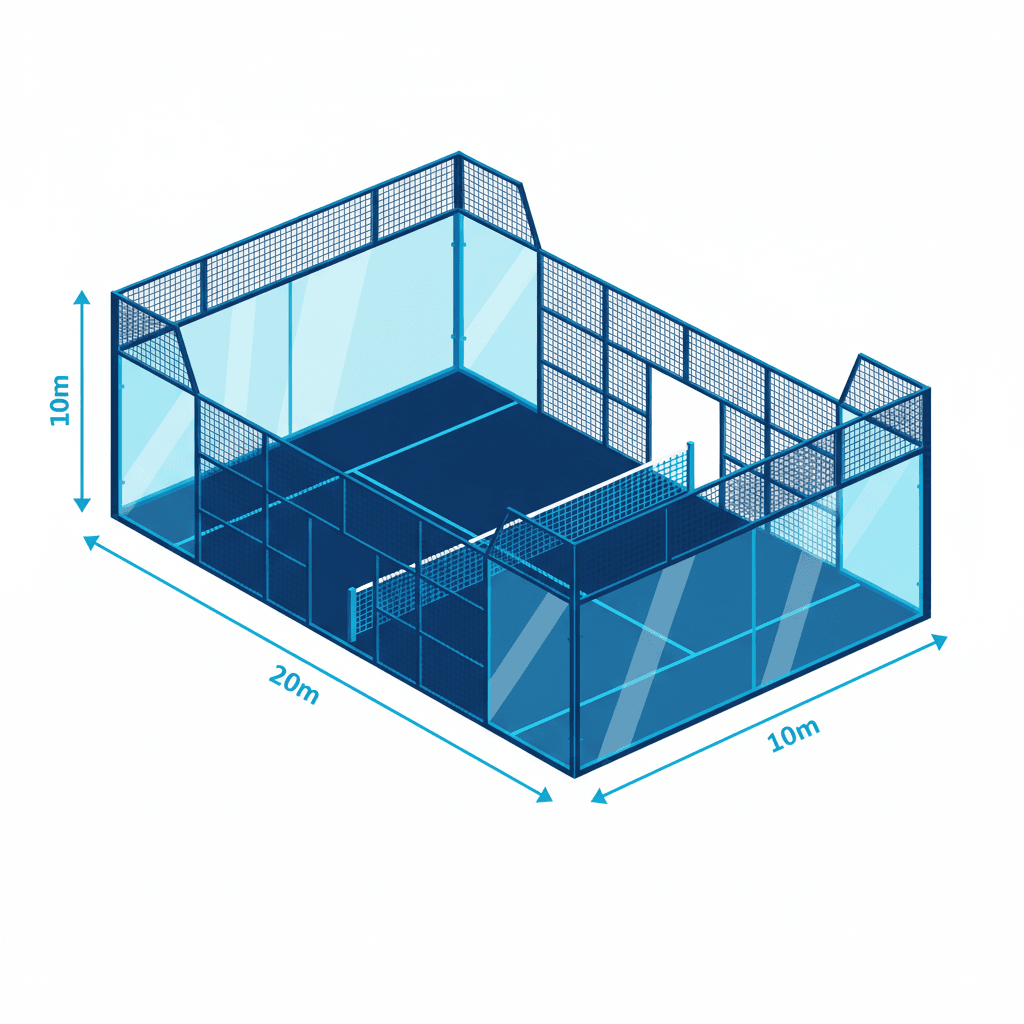
A padel court measures 20 meters long by 10 meters wide, roughly one-third the size of a tennis court. The court is fully enclosed by walls: glass panels on the back walls (4 meters high) and side walls (3 meters of glass plus metal mesh).
The net height is 88cm at the center and 92cm at the posts. The service boxes are marked similar to tennis, with a service line 6.95 meters from the net.
Key Court Features:
- Glass back walls are in play - the ball can bounce off them
- Metal mesh fencing above the glass allows viewing
- The ball can be played after bouncing off any wall
- Players can exit the court to retrieve balls (advanced play)
Scoring System
Padel uses the same scoring system as tennis:
Point Scoring
- 0 points: Love (0)
- 1 point: 15
- 2 points: 30
- 3 points: 40
- 4 points: Game (if leading by 2+)
Match Format
- Set: First to 6 games (win by 2)
- Tiebreak: At 6-6 in a set
- Match: Best of 3 sets
Deuce: When the score is 40-40 (deuce), one team must win two consecutive points to win the game. The first point after deuce is "advantage." In some tournaments, the golden point rule is used where at deuce, the receiving team chooses which side receives, and one point decides the game.
Serving Rules
The serve in padel is always underhand, which makes it accessible for beginners while still allowing for tactical variety.
How to Serve:
- Stand behind the service line, between the center line and side wall
- Bounce the ball on the ground (behind the service line)
- Strike the ball at or below waist height
- Hit diagonally into the opponent's service box
- The ball must bounce in the service box before being returned
Service Faults:
- Ball lands outside the diagonal service box
- Ball hits the net and lands outside the service box
- Ball bounces and hits the metal fence before the second bounce
- Server strikes the ball above waist height
- Server's feet touch or cross the service line before contact
Two serves: Like tennis, you get two attempts. A "let" (serve hitting the net but landing correctly) is replayed.
Wall Play Rules
The walls are what make padel unique. Understanding wall rules is key to mastering the game.
Legal Plays
- Ball bounces on floor, then hits the wall - legal return
- Ball bounces, hits back wall, you volley - legal
- Ball bounces, hits side wall, you return - legal
- Hitting the ball into your own wall to get it over the net - legal (advanced)
Losing the Point
- Ball bounces twice on your side
- Ball hits the metal fence on your side before bouncing
- Ball hits the net and doesn't go over
- Ball bounces on your side and goes out (over walls or fence)
Pro tip: The ball must bounce on the floor before it can hit the wall. If a shot from your opponent hits the wall directly without bouncing, you win the point.
Basic Gameplay
Starting the Point
The server serves diagonally. The returner must let the ball bounce before returning. After the return, the ball can be volleyed (hit before bouncing) or played after the bounce.
During Play
Players can hit the ball directly over the net or use the walls strategically. The ball can bounce off any wall on your side before you hit it, as long as it only bounces once on the floor.
Changing Sides
Teams switch sides after every odd game (1, 3, 5, etc.) in each set, same as tennis.
Doubles Only
Padel is always played as doubles (2 vs 2). There's no official singles format, though some practice drills can be done solo.
Common Beginner Mistakes
1Hitting Too Hard
Padel rewards placement over power. Hard shots often come back off the walls for easy put-aways by your opponents. Focus on control and angles.
2Not Using the Walls
Beginners often avoid wall shots. Practice reading the ball off the glass - it opens up many more shot options and is key to advancing your game.
3Poor Court Position
In padel, the team at the net usually controls the point. Work to get to the net together with your partner and defend as a unit at the back.
4Rushing Serves
Take your time on the serve. Since it's underhand, focus on placement and depth. A well-placed serve can put you in control of the point.
Ready to Play?
Find one of 273+ padel courts near you and put these rules into practice. Most clubs offer beginner sessions and equipment rental.